In high school, I did quite a bit of article writing. It was mostly movie reviews, game reviews, and taking articles from NBC and writing about them. Nothing that required any grand amount of effort. What I quickly learned was that this was an entirely different process all together. There was a lot more work and a lot more dedication that went into it than I originally anticipated.
And I promise you, I was not fond of having my article marked on so many times.
But at the end of the day, if someone asked me, "Do you regret taking the class?" My answer would be "Absolutely not." If someone asked me if I would go through the whole process again, I would absolutely say yes. I learned a lot from it and I can't wait to get started on my next article. This time around, I want to see about taking my own pictures and maybe cover something a bit more interesting than the imminent closing of the Nature's Table.
- Ashley Collier

Wednesday, January 30, 2013

Lining Up Dead for 1st Deadline
First Deadline of The Seminole Scribe as the editor
My first on hand experience as being the editor has been an adventure for this DEADline. Making sure everyone turned in their drafts on time to be edited was harder then peeling a banana with one hand.
On day one, the drafts were due and only 3 out of 7 students turned their drafts in. From here on, I knew this job was going to be more than challenging. Even though I only had three drafts to edit, I spent over an hour on each draft to make sure they have everything possible to make the story more intriguing... more interesting for our readers.
When I sat one-on-one with each reporter to go over their drafts, I asked them the same questions Professor Sheppard would ask me when I turn in my drafts.
- Why is this important to the reader?
- If they were not able to answer these questions, then it shouldn't be in the student newspaper. Simple as that.
- Who did you interview?
- Some students had "anonymous" quotes. Yea.... that was not acceptable. All quotes that were claimed anonymous, my adviser and I either chucked them out or paraphrased them.
- No one wants to read a quote and not know who said it. Might as well put an algebra problem there so people avoid the article.
- When did this occur?
- Is it current news or old news?
- If it was current news then great. A reporter wrote about an event on campus and his article was about covering the event. Only problem was, his whole article covered EVERYTHING. Action by action, which was tedious to go through and edit.
- Another reporter covered a local restaurant in the area which opened a month ago; therefore, it was not current at all in the news world. However, it was still a great piece so editing the story so students will care was challenging. I sat with the reporter to discuss word choice and she even helped design her own story in the newspaper, showing full dedication, which I appreciated.
- Where is this happening?
- If it was on campus, they needed to have at least three different quotes from students. When you have multiple interviews, your quotes tend to differ and it makes the story more interesting to see how different students react to the same situation.
The next day when the second draft was due, it was more easy going. Since I already knew what most of the stories were about, I had a better feeling at how I should help them structure the article.
- Quotes
- Transitions
- Nut graphs
- The lead
I loved working with everyone because I had a chance to experience how other writers handled their stories. Every writer is different and what makes them unique are their word choices, sentence structures and by the depth of their article.
That is why I love The Seminole Scribe. Since we have such a diverse staff this semester, every single article will differentiate from the story sitting on top, below or next to. Long and short articles are printed throughout the entire paper, giving the paper variety, and I like that personally.
I look forward to the rest of the semester working with my peers to make this paper the best Seminole State has ever published.
-- Sabira Mawji, editor
@SabiraMawji
Sabiwashere.com
First Deadline...Check!
As we have finally finished our first newspaper, I am able to to reflect and....RELAX!
Okay, maybe not. Our rough draft for our next story is in 5 days. No pressure...
Writing my first story was a bit of a challenge, but it was definitely a good learning experience. From the reporting to the writing criteria of not being too editorialized, everything was new to me.
I enjoyed seeing my rough drafts progress through each submission and eventually lead into a whole story. Along with being able to be published in a college newspaper, taking my own photos for my article was another added bonus for me. The photos always tie the story together, in my opinion, so it was neat that I was able to capture the details that I wanted.
Seeing the finished newspaper, in all of its beautifully-designed goodness, I am proud to see how everything came together and I can't wait to start newspaper #2!
-Brooklynn Holman
Okay, maybe not. Our rough draft for our next story is in 5 days. No pressure...
Writing my first story was a bit of a challenge, but it was definitely a good learning experience. From the reporting to the writing criteria of not being too editorialized, everything was new to me.
I enjoyed seeing my rough drafts progress through each submission and eventually lead into a whole story. Along with being able to be published in a college newspaper, taking my own photos for my article was another added bonus for me. The photos always tie the story together, in my opinion, so it was neat that I was able to capture the details that I wanted.
Seeing the finished newspaper, in all of its beautifully-designed goodness, I am proud to see how everything came together and I can't wait to start newspaper #2!
-Brooklynn Holman
Wednesday, January 16, 2013
2013
The New Year is here and the new staff posted their first
blog this week. Check out the Staff Bios tab to learn more about us.
This semester, students are required to write six stories
from each of the following:
1. news conference, speech or some formal "live"
event
2. feature of a place/personality profile/sports/travel
piece
3. opinion/review/food story
4. campus story: event, issue, trend, people, etc.
5. human interest story
6. wildcard
Here are some ideas:
- Board meeting- Jan. 28
- Smoke free forum -
Feb. 18
- Student voice forum
- Jan. 28 and March 18
- Planetarium - Valentine's Day show called "Heavenly
Love" from 8 to 9 p.m. on Feb. 14, and from 8:30 to 9:30 on Feb. 15 and
16.
- Planetarium is one of the most advanced in state,
celebrating 25 anniversary
- Sports - Jan. 25 is the baseball home opener
- Student affairs remodel - Jan. 25 starts moving into a
specialist format
- Forum on higher education - Jan. 29 with Dr. Ann McGee
- Decision Day - Feb. 15
- Dream Gala - Feb.16
Biggest fundraiser for school, giving away a car for raffle,
benefits scholarships and programs at Seminole State
- FAFSA tips - Feb. 18 using retrieval system
- IT Hot Technologies expo - Feb.23
- Women's golf tournament over spring break at Magnolia
course in sanford
- Admissions event - March 23 for private and home-school
counselors and principles
- Music days - April 6 for student artists, judged by
professionals
- Seminole County celebrates 100 years - April 20 at
courthouse =
- First generation student scholarships
- QEP reading initiative
Friday, December 14, 2012
Fashionably Late
The biggest lesson I learned this semester is to take the deadlines seriously. Just because the Scribe is a biweekly publication doesn't mean you can slack off and not start your story until a day or two before the final deadline. You need to be researching, interviewing, and taking photos as early as possible. Miss Sheppard may be young and pretty laid back, but she won't print your articles if they aren't ready.
I'll be much more dedicated and punctual next semester in Journalism II, but I believe I've put forth sufficient effort to have earned a B in Journalism I.
Thank you for the experience,
Taryn Martin
Tuesday, December 11, 2012
AMBAR WESSIN
Your tools: camera, recorder and small notebook to write on and a laptop to type your final article.
Camera: Take pictures of everything you can, that you think it can go with your article. Take as many pictures as possible because you may end up using the one picture you thought the least you would use, sometimes you are not aware that you can’t use a picture. And trust me it happens, so if you don’t want to end up without an image to attract readers, get as many pictures as you can. Example: I took a picture for my article – ‘More than Banned books at the Library’, the picture was great, and it was a display of Halloween. The problem was, by the time the newspaper would go to print, it wouldn’t be Halloween anymore. Luckily I took a picture, of a Harry Potter book, and was able to use it. So just have extra things to use, even if you are confident you will be able to use what you have. Take pictures around campus of anything that calls your personal attention too. Engage campus life.
Recorder and reporter notepad: Funny story this one because I must say that this is the hardest part for me about journalism, using the recorder. Just rewinding the recorder, stopping word by word to get a quote right is time consuming. I won’t forget what I have learned about writing articles, use the two things (recorder and notepad) AT THE SAME TIME, Yea you got it right, Both!,
Recorders: are great when your interviewee is on a hurry or you are! And you just want to ask those questions right away, because if you write them down it will take you longer and won’t have time to ask all the questions you want. Having both: can assure you that you got a quote right. Even if you write it, there’s prove you have it, and can go back to it to get it right. You don’t have time to write everything down, so have your recorder on, and because you may also miss on important things your interviewee say. Sometimes the interviewee is saying something important, but you don’t realize it, because it can be hard to stay so focus, as a result you don’t write it, but you have your recorder. You get home and listen to your recorder, and you DISCOVER amazing quotes.
Writing down: what you wrote is important, as you interview make yourself notes. This will help you when writing your final draft of the article and just writing the article. Read your notes, out of your notes you can make an outline of the important things said. So a notebook is just as important, otherwise you will go home with a recorder, waiting for you to fall asleep on. Your notes will be a life savior when you can just make an outline out of them, notes are a great place to start looking at eveything you have to write an article.
Background information- Make yourself a favor and do background research before you interview somebody. Save you and your interviewee time, and do some homework before you start asking questions that you could get easier. Background information is more likely not to be in quotes. It is information that if you don’t know it will make an interview longer and tedious. Background information may include like the what, where, why, who, when, how, etc. They may be available on a website, It could be found on Seminole State College website, or by asking people around, you can find it.
Get to the real Job, Come up with good questions; expect good answers, Save days of work:
One of the most important things learned...the biggest job is been specific on questions, if you come up with good questions, you will spend less time writing an article. Ms. Sheppard taught me, that the reason why I was struggling is because I always exceeded on information, it comes hard to write if you have a long interview, without nothing important said. She taught me to ASK the right questions, use questions that you personally have, because other students may have the same questions and curiosities. Some interviewees just go on talking, so stop them, but for this, you must have questions, be prepared. Some good questions that can lead you to the right track: As a writer, why am I writing about this? What do I want to get across? Why do people care about my topic? What’s going on? What’s strange? What calls your attention the most? What are the solutions for the problem?-Just remember that every article that you make is different, there for they can all have DIFFERENT STRUCTURES. Have fun with it.
-I remember I had too much information, and this time most of it was useful information, so I didn’t know how to break down the story, so Ms. Sheppard, mentioned to me to break down my story in How and Why, and it became a piece of cake. That article is called “Changing Habits, Changes Grades: Success starts with you”. I was able to condense everything I had in two categories so creating categories for yourself will be the best way to condense information, as well as easy for readers to understand what you want to get across. My example of this article was broken down in: How to change your studying habits and why to change your studying habits. It will vary with each article; the structure of it can be something you can play with.
Sources:
You need to interview students, professors, regular people, people affected by the problem, people involved on the matter. It is nonnegotiable not to have an expert on the area in your article. Sources can be people that you may not think have a potential answer for you, but they do. So just get as many quotes as possible. Also some quotes can be just paraphrased. Only quote things that drag special attention to readers.
Struggling: It is there any other topic I rather write about? If so, why not write about it instead? Am I passionate about what I’m writing? Why? If I disagree on something, why not write about that topic? Something intriguing on campus, why not cover it and start asking around what’s going on.
Write the paper: If you are struggling on writing, is because you are being self-conscious. You are a story teller, imagine a person you feel comfortable with (imagine your sister or brother?) Tell her/he what everything is about, assuming that the person you talking to know nothing about your story. So from beginning to an end, what happened? Summarize it, be quick, you can touch on details later on. Generalize as much as you can. Say what you can say in ten sentences in one sentence. Then you can break it down. If you are still struggling, find the most important thing about your article, the most important thing said, and from there you should be good to keep on writing.
Transitions: While the first semester I wrote for the paper I was more worried on learning how to get quotes, this semester I learned how to make transitions.As an editor I learned to make a lot of transitions, NOT transition words like – in addition; Instead use phrases that connect topics.
Opening the article with a lead, describing with
your senses- what you see, smell, feel, and so on
Don’t
forget to have fun!
Many papers, many writing before getting to the final result, but just remember
Is not what your goal is or where are you going, is the JOURNEY THERE where you can find happiness.
Ambar Wessin
Dont hesitate on contacting me on twitter
my plan is on going for Journalism at ucf while I make the best I best out of it.
What I have learned writing for Seminole State
College newspaper- The Scribe
Bitter sweet feeling I have right now, I do feel melancholic that I
won’t write for The Scribe any more, after a year of doing so. I can only take
with me what I have learned: how to report, write articles. I have polished my writing, I have
find myself and I will also take memories of everything that took part in writing an article. When writing in
the future I will recall all this, and if I struggle I will try to listen to
the fading echo of the voice of Professor Ms. Sheppard orienting me on my
stories to get them done. I will try to remember moments of when I was doing an
article, so that when I struggle I can know what to do. I will prove that I have
learned from writing for The Seminole Scribe, when there will be no one to mentor me. It is hard to get everything I
have learned written down but as a journalist, my job is to generalize it, so
here it is and trust me this is not even 1/10 of everything i have learned:
-First decide what you are going to write
about: Be honest, don’t
be self-conscious, what are you passionate about? Done, you got the topic for
your article. It is better to write about something you like than to write
something you think it will be easy to write about. Because you will find
yourself stuck writing about a subject you do not see an angle for, so it will
be hard to develop, it will be hard to write without your personal interest in it. Still
struggling? Go to Google, then search on images something you like, or
something you are angry or passionate about. For example for me: I wrote an
article about going Vegan because I saw pictures of the cruelty towards cows in
the meat industry. Your tools: camera, recorder and small notebook to write on and a laptop to type your final article.
Camera: Take pictures of everything you can, that you think it can go with your article. Take as many pictures as possible because you may end up using the one picture you thought the least you would use, sometimes you are not aware that you can’t use a picture. And trust me it happens, so if you don’t want to end up without an image to attract readers, get as many pictures as you can. Example: I took a picture for my article – ‘More than Banned books at the Library’, the picture was great, and it was a display of Halloween. The problem was, by the time the newspaper would go to print, it wouldn’t be Halloween anymore. Luckily I took a picture, of a Harry Potter book, and was able to use it. So just have extra things to use, even if you are confident you will be able to use what you have. Take pictures around campus of anything that calls your personal attention too. Engage campus life.
Recorder and reporter notepad: Funny story this one because I must say that this is the hardest part for me about journalism, using the recorder. Just rewinding the recorder, stopping word by word to get a quote right is time consuming. I won’t forget what I have learned about writing articles, use the two things (recorder and notepad) AT THE SAME TIME, Yea you got it right, Both!,
Recorders: are great when your interviewee is on a hurry or you are! And you just want to ask those questions right away, because if you write them down it will take you longer and won’t have time to ask all the questions you want. Having both: can assure you that you got a quote right. Even if you write it, there’s prove you have it, and can go back to it to get it right. You don’t have time to write everything down, so have your recorder on, and because you may also miss on important things your interviewee say. Sometimes the interviewee is saying something important, but you don’t realize it, because it can be hard to stay so focus, as a result you don’t write it, but you have your recorder. You get home and listen to your recorder, and you DISCOVER amazing quotes.
Writing down: what you wrote is important, as you interview make yourself notes. This will help you when writing your final draft of the article and just writing the article. Read your notes, out of your notes you can make an outline of the important things said. So a notebook is just as important, otherwise you will go home with a recorder, waiting for you to fall asleep on. Your notes will be a life savior when you can just make an outline out of them, notes are a great place to start looking at eveything you have to write an article.
Background information- Make yourself a favor and do background research before you interview somebody. Save you and your interviewee time, and do some homework before you start asking questions that you could get easier. Background information is more likely not to be in quotes. It is information that if you don’t know it will make an interview longer and tedious. Background information may include like the what, where, why, who, when, how, etc. They may be available on a website, It could be found on Seminole State College website, or by asking people around, you can find it.
Get to the real Job, Come up with good questions; expect good answers, Save days of work:
One of the most important things learned...the biggest job is been specific on questions, if you come up with good questions, you will spend less time writing an article. Ms. Sheppard taught me, that the reason why I was struggling is because I always exceeded on information, it comes hard to write if you have a long interview, without nothing important said. She taught me to ASK the right questions, use questions that you personally have, because other students may have the same questions and curiosities. Some interviewees just go on talking, so stop them, but for this, you must have questions, be prepared. Some good questions that can lead you to the right track: As a writer, why am I writing about this? What do I want to get across? Why do people care about my topic? What’s going on? What’s strange? What calls your attention the most? What are the solutions for the problem?-Just remember that every article that you make is different, there for they can all have DIFFERENT STRUCTURES. Have fun with it.
-I remember I had too much information, and this time most of it was useful information, so I didn’t know how to break down the story, so Ms. Sheppard, mentioned to me to break down my story in How and Why, and it became a piece of cake. That article is called “Changing Habits, Changes Grades: Success starts with you”. I was able to condense everything I had in two categories so creating categories for yourself will be the best way to condense information, as well as easy for readers to understand what you want to get across. My example of this article was broken down in: How to change your studying habits and why to change your studying habits. It will vary with each article; the structure of it can be something you can play with.
Sources:
You need to interview students, professors, regular people, people affected by the problem, people involved on the matter. It is nonnegotiable not to have an expert on the area in your article. Sources can be people that you may not think have a potential answer for you, but they do. So just get as many quotes as possible. Also some quotes can be just paraphrased. Only quote things that drag special attention to readers.
Struggling: It is there any other topic I rather write about? If so, why not write about it instead? Am I passionate about what I’m writing? Why? If I disagree on something, why not write about that topic? Something intriguing on campus, why not cover it and start asking around what’s going on.
Write the paper: If you are struggling on writing, is because you are being self-conscious. You are a story teller, imagine a person you feel comfortable with (imagine your sister or brother?) Tell her/he what everything is about, assuming that the person you talking to know nothing about your story. So from beginning to an end, what happened? Summarize it, be quick, you can touch on details later on. Generalize as much as you can. Say what you can say in ten sentences in one sentence. Then you can break it down. If you are still struggling, find the most important thing about your article, the most important thing said, and from there you should be good to keep on writing.
Transitions: While the first semester I wrote for the paper I was more worried on learning how to get quotes, this semester I learned how to make transitions.As an editor I learned to make a lot of transitions, NOT transition words like – in addition; Instead use phrases that connect topics.
·
Then background information
·
Make sure to include What, Where, When, Why, How
·
Body:
transition and quotes,
·
End with
a kicking quote that will leave people thinking
·
Not everything can be a quote; some of it can be
paraphrase it.
·
If you
spend time in your questions, you will expend less time writing the article
(Probably most important thing learned, then it will be a matter of using
transitions to have ready the article
·
Having difficulties? Ask Ms. Sheppard. Example: She
helped me break down my story of How and Why
·
My Favorite moments:
# can’t help to
crack up with a good laugh, when someone you are interviewing says something funny
that you were not expecting.
# interviewing the astronauts
one on one, they are so important yet so down to earth
# having access
that media gets, that the general public doesn’t
# People look intimidating at first but they are
really down to earth #I have discovered
# eating pizza with the colleagues of the Seminole
Scribe
# realizing how much I have improved in my writing
# Finding my life purpose by writing for the Seminole
scribe
# Defining that
Journalism is the only career that puts my best qualities to use, creative:
which I can use when breaking down stories and my ability to generalize and
summarize
In general, thanks to writing for The
Seminole Scribe and Ms. Sheppard, I’m sure I’m going to be a reporter and that that’s
what I want. Within two semesters I feel like I’m capable of reporting for any
famous Media company, because I was taught everything, now I just need to
polish my skills and keep on learning.
In a nut shell: This was by far the most
challenging thing I have put my mind through, yet the most fun of it all. This wasn’t about a grade it was about finding
my life purpose: writing with a purpose.
It is not over yet, you will hear from me, maybe not on The Seminole Scribe
printed version, but ill post things that I left unsaid or didn’t have the time
to post before. And I’ll be around, stay tuned, because when you are tuned life
is sweeter ;)Is not what your goal is or where are you going, is the JOURNEY THERE where you can find happiness.
Ambar Wessin
Dont hesitate on contacting me on twitter
my plan is on going for Journalism at ucf while I make the best I best out of it.
Monday, December 10, 2012
Possibilites
Ever since I was given a pen to write with, I never stopped writing. My passion for writing led me to joining the yearbook club in elementary school and yearbook class in middle school. In High School I joined the newspaper club for just one semester while I was in California and I loved it. My dream is to have my own column in a world known newspaper and now its just about taking the baby steps to get there. The first baby step was taking a journalism class in college.
At the beginning I was so nervous to enter this class and the professor in the front looked very intimidating. I thought she was going to be like that mean editor in Spiderman.... that movie scared me btw for being a journalist.
Yet how I was wrong. This class was taught so informal that it was indirectly teaching us that we are our own person and we have to take our own steps to achieve things in life without having someone to hold our hands.
These are the major things I learned this class.
1. No matter what, make sure that the person you are interviewing knows you are a jorunalist or things can get really down and dirty
2. Always get your quotes right. You dont want someone knowing on your door with their lawyer.
3. Dont be Lazy. HUSTLE. HUSTLE. HUSTLE. How do you expect to get a good story by just sitting on your lazy butt all day. Get out and go hunting!
4. Social media is very important. I opened up a twitter, wordpress, wix.com site, and a linkedin all in one semester because I never knew these sites could benefit my career.
5. Make sure you are ethical in your reporting. Do NOT make up quotes, stories, or accuse someone of doing something just to make your story better. Not only does this make you look STUPID when caught, just go be a story teller instead of a news reporter.
Time to be conceited:
I knew I was born to write. Everyone always made me edit their papers in high school and when we were given a research paper, BAM thats an easy A. But journalism was a bit different that what I thought it was going to be. Its not just about writing. Its about getting out there and meeting people to hear their stories. I always thought i was a social butterfly but not until our first assignment. I was nervous out of my shoes on what on earth I was going to ask these people. However, once I got that story going, it just kept getting better and better for me. I did not once think aside what I was going to ask them.
When I had to interview the director of a play, I made a list of brief bullet points on my phone, took out my recorder and just started talking. To the point, I didnt even use my bullet points because since the conversation was so natural, and I was already interested in the deets behind it, I got way more than what I needed for the story. AWESOMENESS

I see myself being very succesfull in this career with a little bit of white hairs because yes it is challenging. But like I said, taking baby steps.
Sabira Mawji
@SabiraMawji
At the beginning I was so nervous to enter this class and the professor in the front looked very intimidating. I thought she was going to be like that mean editor in Spiderman.... that movie scared me btw for being a journalist.
Yet how I was wrong. This class was taught so informal that it was indirectly teaching us that we are our own person and we have to take our own steps to achieve things in life without having someone to hold our hands.
These are the major things I learned this class.
1. No matter what, make sure that the person you are interviewing knows you are a jorunalist or things can get really down and dirty
2. Always get your quotes right. You dont want someone knowing on your door with their lawyer.
3. Dont be Lazy. HUSTLE. HUSTLE. HUSTLE. How do you expect to get a good story by just sitting on your lazy butt all day. Get out and go hunting!
4. Social media is very important. I opened up a twitter, wordpress, wix.com site, and a linkedin all in one semester because I never knew these sites could benefit my career.
5. Make sure you are ethical in your reporting. Do NOT make up quotes, stories, or accuse someone of doing something just to make your story better. Not only does this make you look STUPID when caught, just go be a story teller instead of a news reporter.
Time to be conceited:
I knew I was born to write. Everyone always made me edit their papers in high school and when we were given a research paper, BAM thats an easy A. But journalism was a bit different that what I thought it was going to be. Its not just about writing. Its about getting out there and meeting people to hear their stories. I always thought i was a social butterfly but not until our first assignment. I was nervous out of my shoes on what on earth I was going to ask these people. However, once I got that story going, it just kept getting better and better for me. I did not once think aside what I was going to ask them.
When I had to interview the director of a play, I made a list of brief bullet points on my phone, took out my recorder and just started talking. To the point, I didnt even use my bullet points because since the conversation was so natural, and I was already interested in the deets behind it, I got way more than what I needed for the story. AWESOMENESS

I see myself being very succesfull in this career with a little bit of white hairs because yes it is challenging. But like I said, taking baby steps.
Sabira Mawji
@SabiraMawji
Sunday, December 9, 2012
What I learned...
Growing up, we are told that no one is perfect. There is no such thing as perfection. Yet, we are also told that practice makes perfect. I have learned that there really is no such thing as perfect, and aiming for something that doesn't exist will only stress you out.
I have learned that practice can help you master something. Practice is what it takes to do the best you are capable of doing, and hell, that might as well be perfection.
I have learned that there is always room for improvement. No matter how well you think you may have wrote something, you'll get a paper back marked in ink with corrections. Seeing this doesn't mean you have failed, it means there is room for improvement.
I have learned to not let your pride get in the way of asking for help.
I have also learned that curiosity doesn't kill the cat; curiosity gets that cat a damn good story.
After my first couple of articles, I learned that I am more interested in SHOWING people what is happening, rather than writing it down in an article. I plan to pursue photojournalism instead from this experience.
This class has opened up my eyes to what I want in life, to be honest. This class helped me rediscover my true passion. Photography.
I can put my curiosity and creativity together to produce something totally amazing. It takes the right kind of person to teach and guide someone into what they really want out of life. This class did that.
I plan to take Photojournalism next semester and have a feeling that will be a great experience as well.
Through Buddhism and this class, I have learned you have to find the truth yourself. Don't believe what you hear. To become enlightened, you have to search for the truth on your own and DEFY THE LIES!
Buddha's final words of encouragement to his students were something like, "Be a guiding light to yourselves; continue forward with vigorous effort and steadfast commitment to the truth."
Take that advice, and you'll be surprised what you can achieve.
Thanks, Ms. Sheppard.
-danielle wiebe
online portfolio

I have learned that practice can help you master something. Practice is what it takes to do the best you are capable of doing, and hell, that might as well be perfection.
I have learned that there is always room for improvement. No matter how well you think you may have wrote something, you'll get a paper back marked in ink with corrections. Seeing this doesn't mean you have failed, it means there is room for improvement.
I have learned to not let your pride get in the way of asking for help.
I have also learned that curiosity doesn't kill the cat; curiosity gets that cat a damn good story.
After my first couple of articles, I learned that I am more interested in SHOWING people what is happening, rather than writing it down in an article. I plan to pursue photojournalism instead from this experience.
This class has opened up my eyes to what I want in life, to be honest. This class helped me rediscover my true passion. Photography.
I can put my curiosity and creativity together to produce something totally amazing. It takes the right kind of person to teach and guide someone into what they really want out of life. This class did that.
I plan to take Photojournalism next semester and have a feeling that will be a great experience as well.
Through Buddhism and this class, I have learned you have to find the truth yourself. Don't believe what you hear. To become enlightened, you have to search for the truth on your own and DEFY THE LIES!
Buddha's final words of encouragement to his students were something like, "Be a guiding light to yourselves; continue forward with vigorous effort and steadfast commitment to the truth."
Take that advice, and you'll be surprised what you can achieve.
Thanks, Ms. Sheppard.
-danielle wiebe
online portfolio

Wednesday, December 5, 2012
What I've Learned in JOU 1100
This semester has been life changing for me to say the least.
It hasn't been since my photography class in high school that I have been so passionate about a subject.
I switched majors from interior design to persue journalism.
More specifically, photojournalism.
I have learned how difficult it is to work with other people who aren't as passionate as you are about a subject or just don't care at all. It's a shame, but such is life. We are all here at Seminole State College to explore our futures and expand our minds. Sometimes it takes switching majors to find out what you really love, like it did in my case.
I have also met some wonderful individuals whom I hope to remain in contact with. Who knows? Maybe we'll be colleagues one day!
I attempted to write a few stories and they weren't terrible, but I figured out that writing on a strict deadline is difficult.
After realizing this, I was able to switch to designing the issues and taking/editing photos. This is what I really love, but I am not going to give up on writing completely.
I learned the importance of social media and how it can make or break your career.
A quote to live by: "If you're going to be a journalist, you have to hustle." There are no room for slackers in this business.
You also have to be able to do all aspects of journalism now. You have to be able to write, edit, take photos, and produce.
That being said, going into the next semester I plan to create my own website to put myself out there. Maybe even a blog.
I feel as if I have been given the tools and knowledge to be successful, now it's up to me to make it happen.
After taking this class, I feel like I have not only grown as a journalist, but a person as well.
As far as grades are concerned, I feel I deserve an A for the effort I put in.
Thank you very much for a great semester and it was wonderful meeting you all.
-Ashley Crooke
Twitter: @AshCrooke
Flickr: http://flic.kr/ps/2oiLbq
 |
| Photo Credit: Kyle Evans |
It hasn't been since my photography class in high school that I have been so passionate about a subject.
I switched majors from interior design to persue journalism.
More specifically, photojournalism.
I have learned how difficult it is to work with other people who aren't as passionate as you are about a subject or just don't care at all. It's a shame, but such is life. We are all here at Seminole State College to explore our futures and expand our minds. Sometimes it takes switching majors to find out what you really love, like it did in my case.
I have also met some wonderful individuals whom I hope to remain in contact with. Who knows? Maybe we'll be colleagues one day!
I attempted to write a few stories and they weren't terrible, but I figured out that writing on a strict deadline is difficult.
After realizing this, I was able to switch to designing the issues and taking/editing photos. This is what I really love, but I am not going to give up on writing completely.
I learned the importance of social media and how it can make or break your career.
A quote to live by: "If you're going to be a journalist, you have to hustle." There are no room for slackers in this business.
You also have to be able to do all aspects of journalism now. You have to be able to write, edit, take photos, and produce.
That being said, going into the next semester I plan to create my own website to put myself out there. Maybe even a blog.
I feel as if I have been given the tools and knowledge to be successful, now it's up to me to make it happen.
After taking this class, I feel like I have not only grown as a journalist, but a person as well.
As far as grades are concerned, I feel I deserve an A for the effort I put in.
Thank you very much for a great semester and it was wonderful meeting you all.
-Ashley Crooke
Twitter: @AshCrooke
Flickr: http://flic.kr/ps/2oiLbq
Monday, December 3, 2012
You Created a Journo-Monster!
 Through high school and the beginning of my college career, I was positive that my writing skills were above average. I would become easily frustrated in group projects working with people that had yet to grasp basic grammar skills, and was constantly praised by instructors for my compositions. But through this semester in Journalism I, I have learned that there is constant room for improvement. I have gained some skills in interviewing and in writing in a non-narrative format, and after writing draft after draft for each article, I have seen where my writing can be improved.
One of the main lessons I learned through this course was the importance of social media in the journalism world. Through this class alone I have opened a Twitter account and have started following some big names in media, a Tumblr account for personal interviews and reviews of tattoo art and body modifications, and a new email to represent myself professionally to future employers. Social media are today's newspapers, and I am already honing the skills to become a writer for social media sites.
This course was not only a test of my abilities but of my interest in pursuing a career in journalism. Essentially, I have decided to continue on the journo. path and eventually write for a tattoo and body art magazine. Hopefully moving on to a feature writing course next semester, I am excited to learn more about journalism and write more and more on my blog.
Through my body of work this semester, in combination with my attendance, class participation, and my final portfolio, I believe I deserve a grade B. For my effort in preparing a minimum of 3 drafts for each article, my attempts to create a professional social media curuit surrounding my writing, and my class participation in designing and assisting, I see a B as a fair and fitting grade.
Journalism
Can I do this?
We are lives in progress.
Unmade.
Incomplete.
Learning comes from doing. Trying and ultimately failing. We learn so much more from our mistakes than from our sucesses. We fall down so often, the triumph comes from getting back up.
This class taught me that. I learned to walk, not run. I learned to just walk away for a new perspective. I learned structure. I learned what to put in and what to leave out. I learned how to edit, how to design and how to attribute. I learned that I can do this. I can become a journalist.
I am not perfect, do not want to be. I will get better. I will try harder. I will be me.
I am a journalist. Getting better every single day.
Thank you.
Michael Tennant
@mtennant71
Photo A Day Challenge- Day 30: On the wall

xdanixwiebex: christmas lights, photo collage, two paintings I did, and an Andy Warhol Print


Photo A Day Challenge- Day 29: Big

xdanixwiebex: big holes in my shirt

xdanixwiebex: big pile of laundry

xdanixwiebex: big hickey

Wednesday, November 28, 2012


Monday, November 26, 2012
Day trip to "The Oldest City in America": St. Augustine
On November 17th, 2012, I took a trip to St. Augustine hoping to find some paranormal activity. Instead, I found a city full of old architecture and interesting things to look at.
Here is my journey through photos.

Church Gates

A collection of scrapers and scalpels

Anesthetics and gynelogical tools

The tower of The Cathedral Basilica of St. Augustine

The last piece of Woolworth's you'll ever see

A canon at Castillo De San Marcos

A cloudy day outside of Castillo De San Marcos

The cast of Seinfeld stopped by Potter's Wax Museum

So did Watto, Anakin Skywalker, and Darth Vader

Jack Nicholson as The Joker was coming out of the wall.
All photos by Ashley Crooke


Photo A Day Challenge- Day 24: a sound you heard

xdanixwiebex: Straightening at work and these guys were making noise


dog snoring


Photo A Day Challenge- Day 22: Grateful

xdanixwiebex: My thanksgiving dinner with my family and friends

This is my dad's picture. He is grateful for my sister and me. But I took the liberty to crop myself out (:

Photo A Day Challenge- Day 21: What you wore

xdanixwiebex: this is a reenactment of what i wore. Black tank top, black yoga pants, black hoodie, and black moccasins.


Photo A Day Challenge- Day 20: Work/Play

xdanixwiebex: my play time before work

xdanixwiebex: on break at work.

Monday, November 19, 2012
Holiday Recipes: Gluten-Free
I am doing this post in honor of my younger brother, Andy Crooke. When he was four years old, he got very ill. He would vomit repeatedly almost immediately after every meal. My family was very concerned. We went to multiple doctor's appointments and kept getting told "it's just a virus, it will pass." Well, after months of this virus not passing, my mom was at her wits end. She took him to Nemours in Orlando, FL and they finally were able to perform an endoscope on Andy and find the cause of the problem. Andy was diagnosed with Celiac Disease and was told to follow a gluten-free diet.
A gluten-free diet is a diet that excludes the protein gluten. Gluten is found in grains such as wheat, barley, rye and triticale (a cross between wheat and rye).
A gluten-free diet is used to treat celiac disease. Gluten causes inflammation in the small intestines of people with celiac disease. Eating a gluten-free diet helps people with celiac disease control their signs and symptoms and prevent complications.
Andy has been following this diet for 6 years now and is symptom free.
For more information on Celiac Disease or Gluten-Free Diets go to: http://www.mayoclinic.com/health/gluten-free-diet/my01140
Here is an example of Thanksgiving meal at The Crooke Residence:
Appetizer:
Cheddar and Bacon Gluten Free Cornbread Recipe
http://www.preparedpantry.com/recipes/gluten-free-cornbread.htm

Photo courtesy of: google.com

Recipe courtesy of: preparedpantry.com
Main Course:
Roasted Garlic & Meyer Lemon-Rubbed Turkey
http://www.eatingwell.com/recipes/garlic_lemon_roast_turkey.html

Photo and recipe courtesy of: eatingwell.com
Side Dish:

Lemon Dijon Mustard Honey Baby Carrots
http://www.food.com/recipe/lemon-dijon-mustard-honey-baby-carrots-12756
Photo and recipe courtest of: food.com
Dessert:
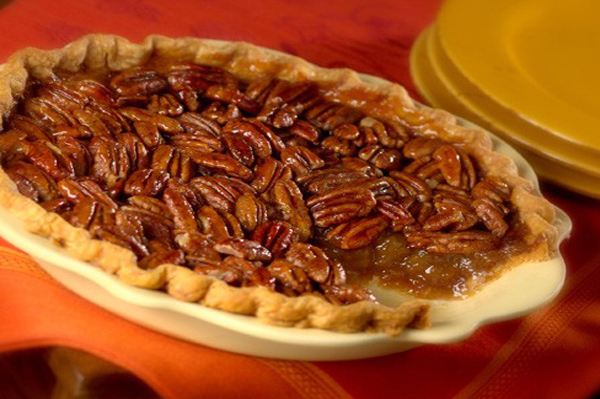
Gluten-Free Pecan Pie
http://www.sheknows.com/food-and-recipes/articles/820756/Gluten-free-Thanksgiving-pecan-pie
Photo and recipe courtesy of: sheknows.com
Celiac Disease has had a big impact on my family at meal time, but as you can see, many recipes can be altered to fit the guidelines and keep everyone happy and healthy.
Enjoy and Happy Holidays!
-Ashley Crooke
Twitter: @ashcrooke
Photo A Day Challenge- Day 19: something awesome

xdanixwiebex: watching "The Union: The Business Behind Getting High" in class!

xdanixwiebex: Seeing my photos being used in The Seminole Scribe


Subscribe to:
Posts (Atom)